Adapt is an open-source Node.js library for building AI memory systems that learn and evolve over time, rather than just storing and retrieving data.
Most memory systems memorize instead of learn — a fixed structure trying to hold non-deterministic data, so they can’t reason across time or adapt when the data changes shape. Adapt fixes that with two parts: a Brain that routes incoming data, synthesizes answers, and watches whether the current structure still covers the domain, and Neurons that each learn one slice of it by compressing observations into understanding instead of hoarding records. When the Brain detects gaps, redundancy, or overload, it reconfigures itself — splitting, merging, or creating neurons with no schema migration and no manual loop.
You steer it with three operations — inject() to feed new observations, signal() to nudge structural change, and adjust() to tune a single neuron — while querying stays separate, returning answers with relevance and confidence scores so the system can explain how strongly each neuron contributed.
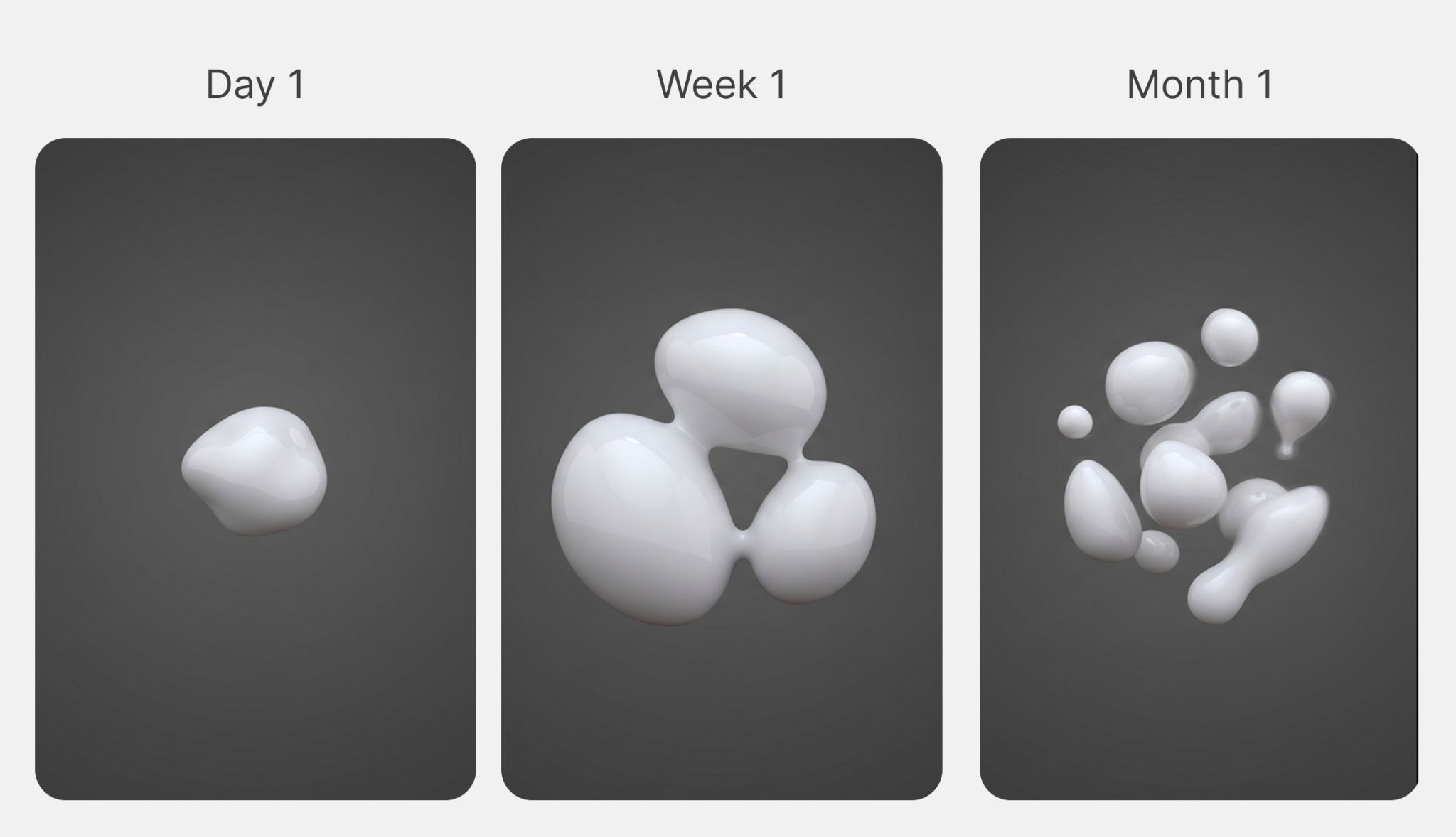
Adapt’s memory structure changes as it observes more data: one broad neuron can split into a more specific network over time.
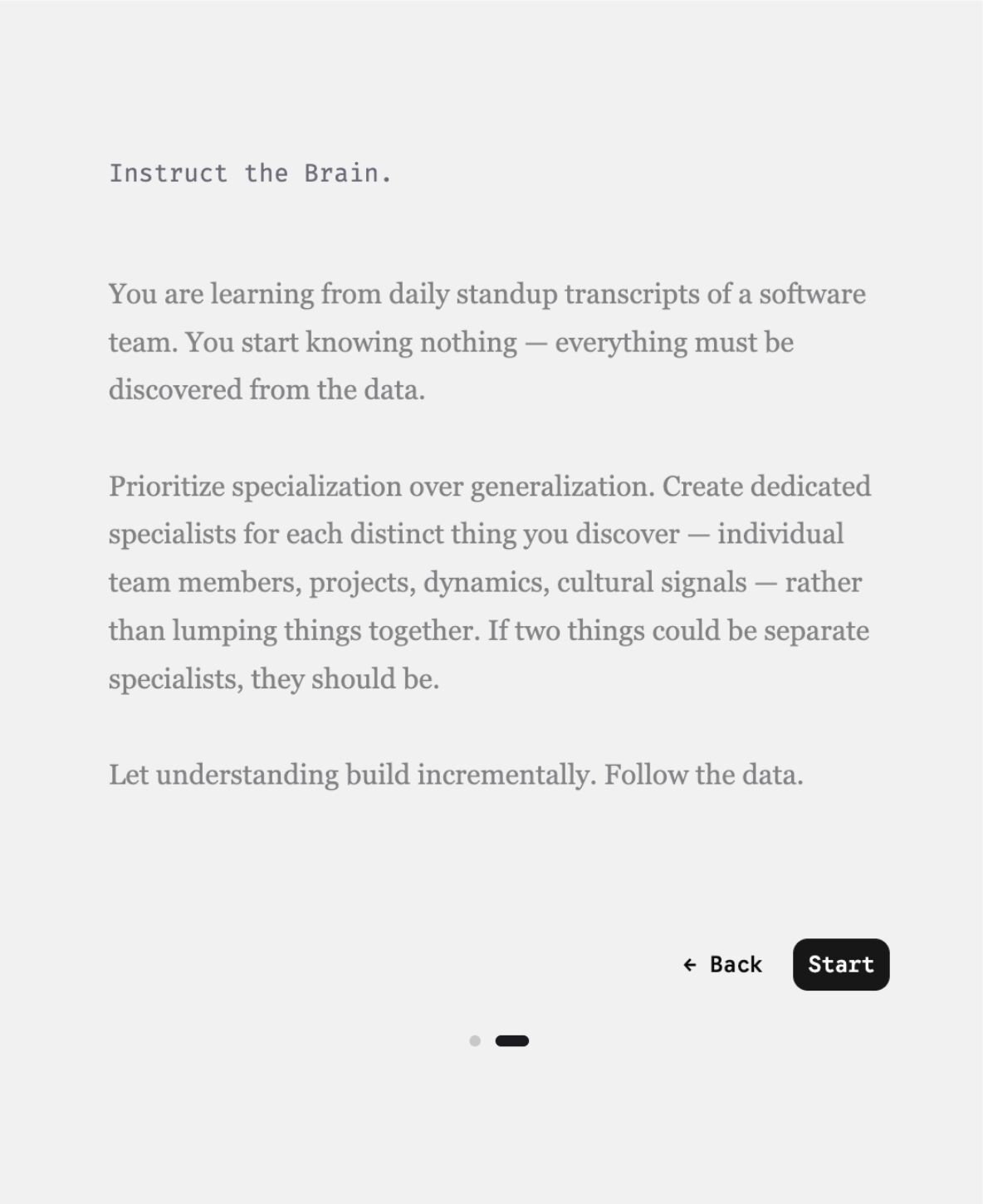
The setup phase tells the Brain what kind of domain it is entering, then Adapt starts constructing its own memory structure from incoming data.
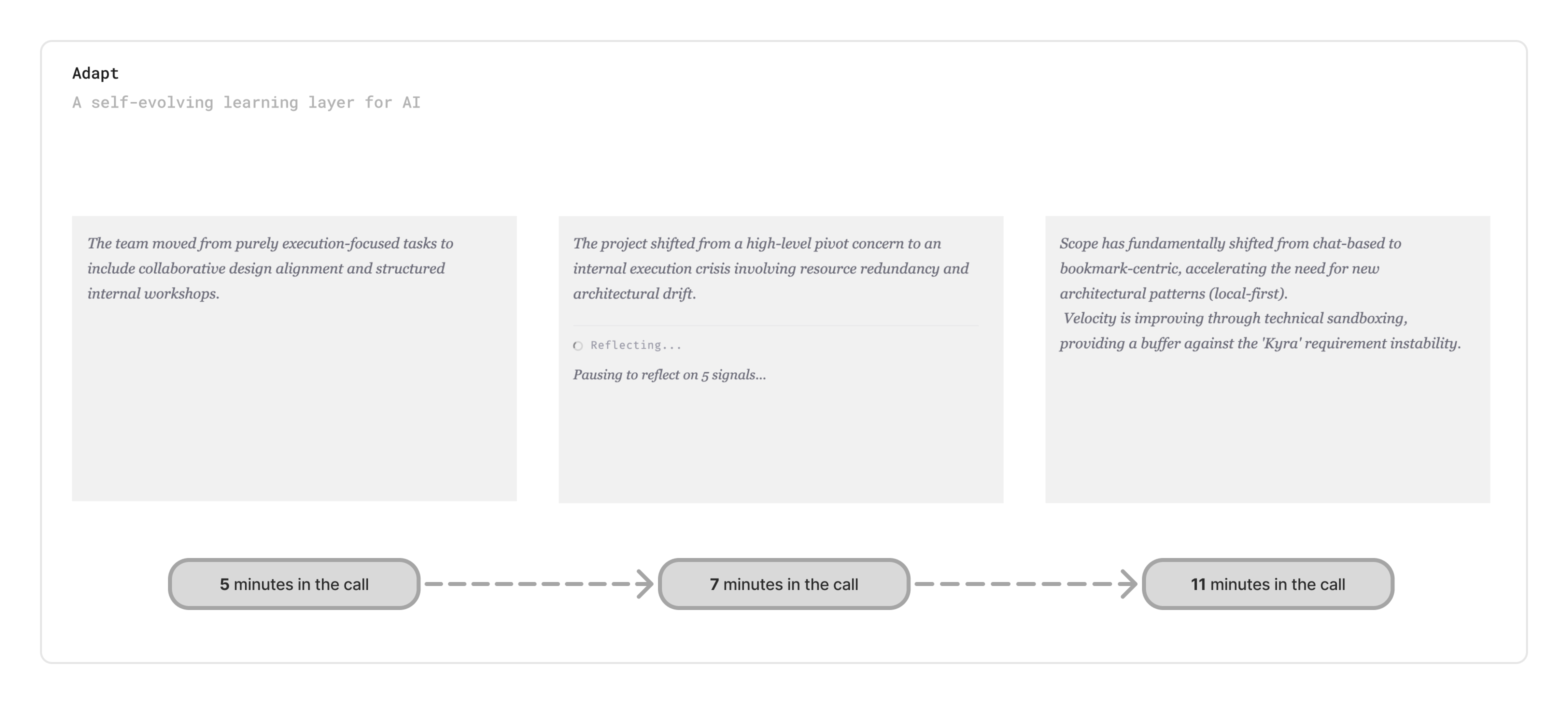
Adapt can update its understanding as a process unfolds, rather than waiting for a finished archive to retrieve from.
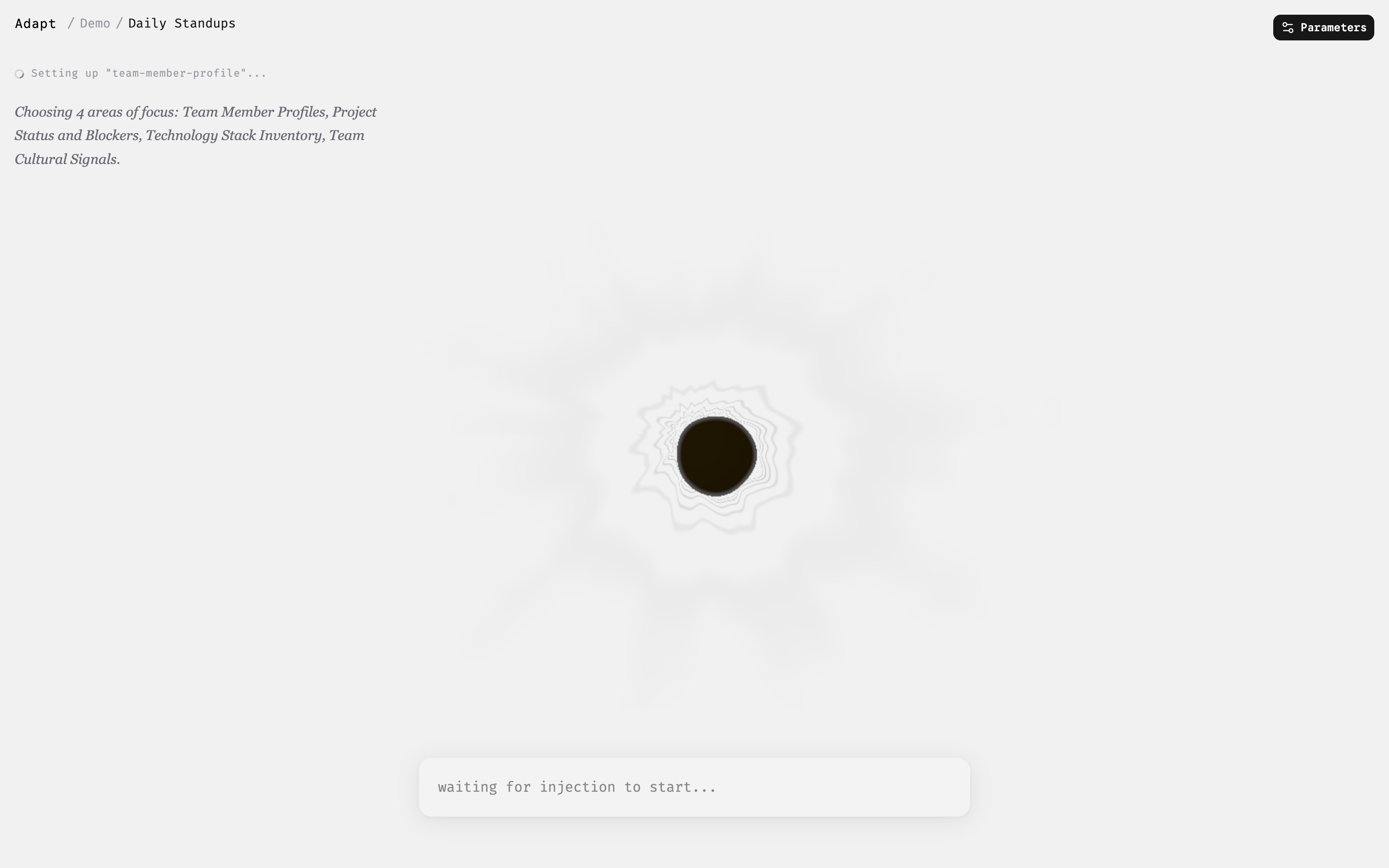
During initialization, Adapt prepares the Brain and starts ingesting standup data.
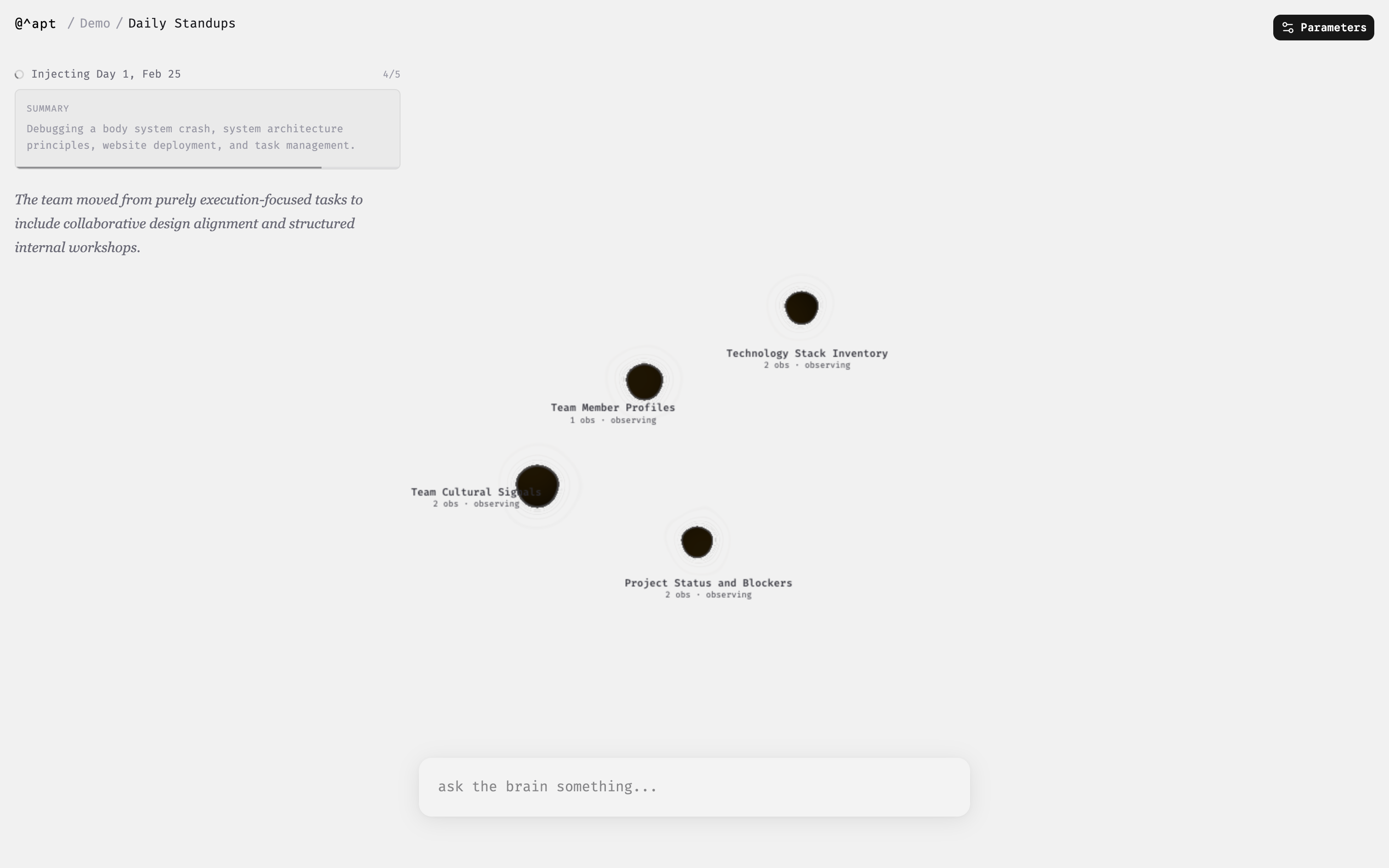
As data comes in, specialized neurons begin to represent distinct areas of organizational memory.
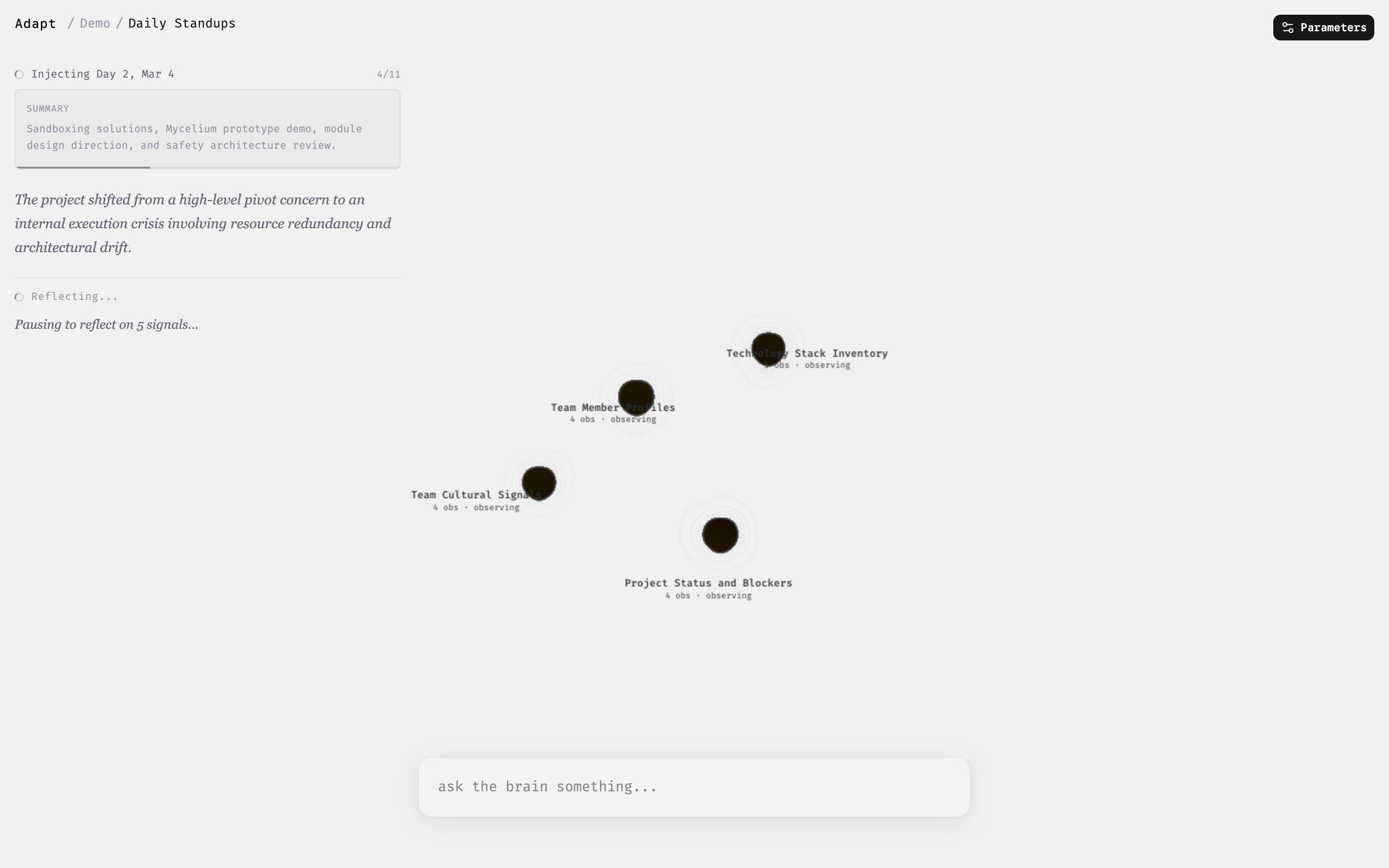
The demo visualizes how neurons organize, observe, and summarize the data injected into the system.
Links
- Site: adapt.unbody.io
- Docs: adapt.unbody.io/docs
- Core concepts: adapt.unbody.io/docs/concepts
- Source: github.com/unbody-io/adapt
- Background: Why I built Adapt
Adapt is fully open source under the MIT license.